King Crab Safari Tromso
See tours

How it works

What happens on a king crab safari, hour by hour

What happens on a king crab safari is simpler than the photographs suggest: you meet at a quay, put on a thermal suit, sail twenty minutes to water that is two hundred metres deep, help haul a pot that has been sitting on the bottom since yesterday, look at what is inside it, and then eat the crab. Our top pick at $265 takes four and a half hours to do that and finishes in a restaurant; the three-hour boats do it faster and serve the crab at sea.

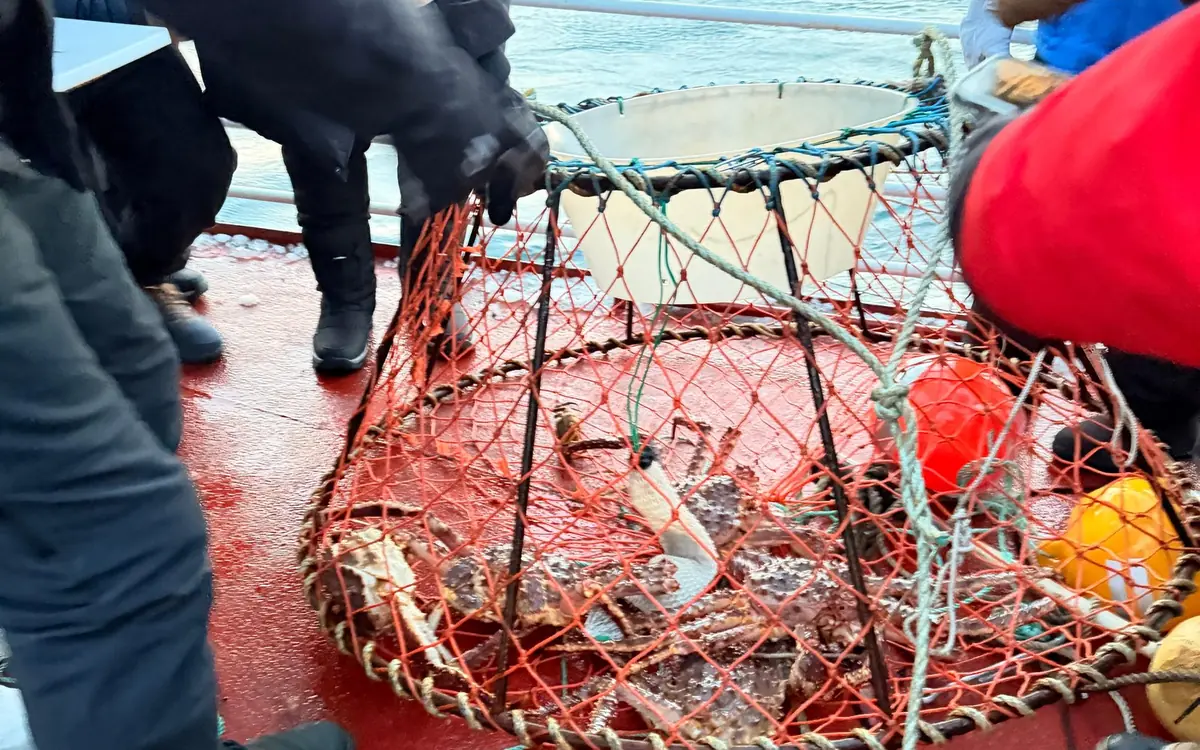
Crew and guests hauling a crab pot onto the deck

Quick answer

Every king crab safari here follows the same four steps: suit up, sail out, haul the pot, eat the crab. On our top pick at $265 that takes four and a half hours, with the meal served in a restaurant ashore. The small-group boat at $310 adds the two steps that come before the haul: you prepare the bait and set the traps yourself. The Senjafjell at $361 works the pots with a small group in the fjords outside town. In Kirkenes the shape changes with the season: a RIB in summer at $279, and in winter a snowmobile sled to a trap under the ice at $369.

A king crab safari in Tromsø, step by step

Meeting point
A quay in the town centreTromsø boats leave minutes from Storgata
What you are given
A thermal flotation suitboots, gloves and a hat on every boat here
Time to the grounds
About twenty minutesthe crab live close to town in deep fjord water
Depth the pots sit at
Roughly 100–250 mthey are set the day before and left to soak
Who pulls the pot
You, with the crewstated on every hands-on listing here
What comes up
Red king crabplus starfish, the occasional cod, and water
Usual portion
One crab between twothe standard serving on a Norwegian crab safari
Where you eat it
Restaurant or on boardashore on our top pick, at sea on the others
Total time
Two to four and a half hourseleven on the day from Saariselkä
Our top pick
$26587 reviews at 4.4, the pots and a lunch ashore

Before you leave the quay

The suit is the first thing that happens

Thermal suit on, phone secured, five-minute briefing.

You arrive at a quay in the middle of Tromsø, a short walk from the main street, and the first twenty minutes are spent getting dressed. The boats hand out a one-piece thermal flotation suit that goes over your own clothes, with boots, gloves and usually a hat. It is buoyant, it is windproof, and it is the reason a king crab safari runs comfortably in January as well as July.

Wear wool or a fleece underneath rather than cotton, and keep the layers thin: the suit does the work, and a thick jacket beneath it makes the zip a fight. Bring a strap for your phone. Everybody photographs the crab, and the rail is where phones go over the side.

The briefing that follows takes five minutes and covers the boat, the rail and the crab itself: a red king crab has a shell the width of a dinner plate, legs that span more than a metre, and it holds on hard. The crew show you where to take hold of it, which is across the back of the shell, well behind the claws. Every king crab safari Tromso runs begins this way, whichever boat you booked.
The crossing

Twenty minutes, and the reason the grounds are that close

A short crossing to the western edge of the crab’s range.

Tromsø sits on an island with deep water on both sides, and the king crab grounds are minutes from the quay. That is a piece of geography worth understanding, because it is unusual: the red king crab was brought from the Pacific to the Barents Sea in the nineteen sixties, spread west along the Norwegian coast on its own, and the dense population reaches as far west as Tromsø and stops there. Water further south is warmer than the crab prefers, and the crab likes it between two and eight degrees.

So a king crab cruise tromso operators run is not a long haul out to a distant bank. It is a short crossing to a shelf where the pots were set yesterday, in water one hundred to two hundred and fifty metres deep, on the western edge of everywhere this animal lives.

On the way out the fjord does the entertaining. In winter that is dark water, snow on the peaks of Kvaløya and, on a clear evening, a chance of the aurora overhead. In summer it is the midnight sun on the same water at eleven at night.

Book direct

The four most hands-on trips here

Our top pick, the small-group hunt, the Senjafjell crab tour and the trap under the ice.

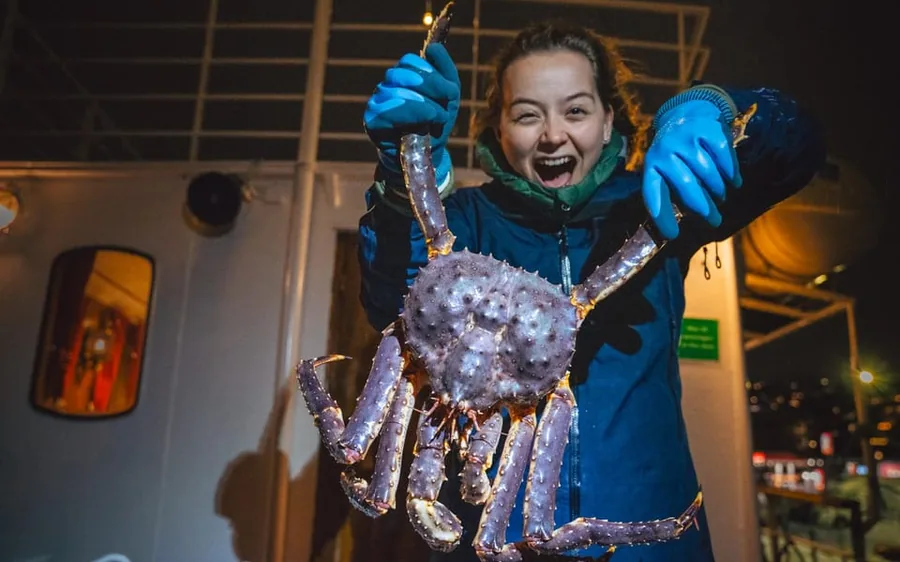
A guest holding a large king crab on deck in the evening light
Our top pick87 reviews
4.5 h

Tromsø: King crab cruise & self-captured lunch in restaurant

4.4 · 87 reviews

  • Four and a half hours, hunting Arctic king crabs aboard an explorer vessel
  • King crab lunch and fish soup
  • You haul the pots yourself
  • Free cancellation
$265$58.89 / hour
Check availability
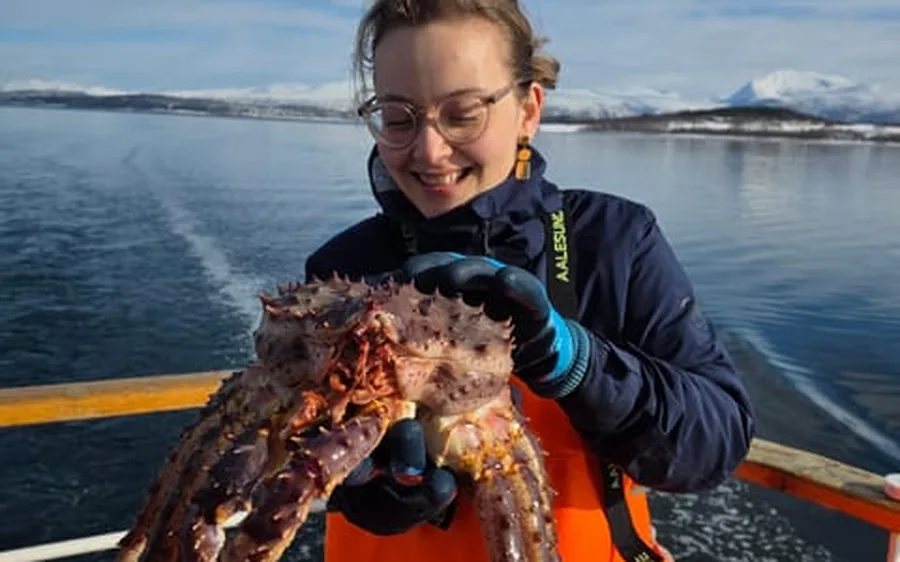
A guest holding a king crab with the fjord behind her
Small groupNew
3 h

Tromsø: Exclusive King Crab Fishing Experience

  • Three hours, an exclusive small-group crab hunt
  • You bait and set the traps
  • Fresh seafood served on board
  • Free cancellation
$310$103.33 / hour
Check availability
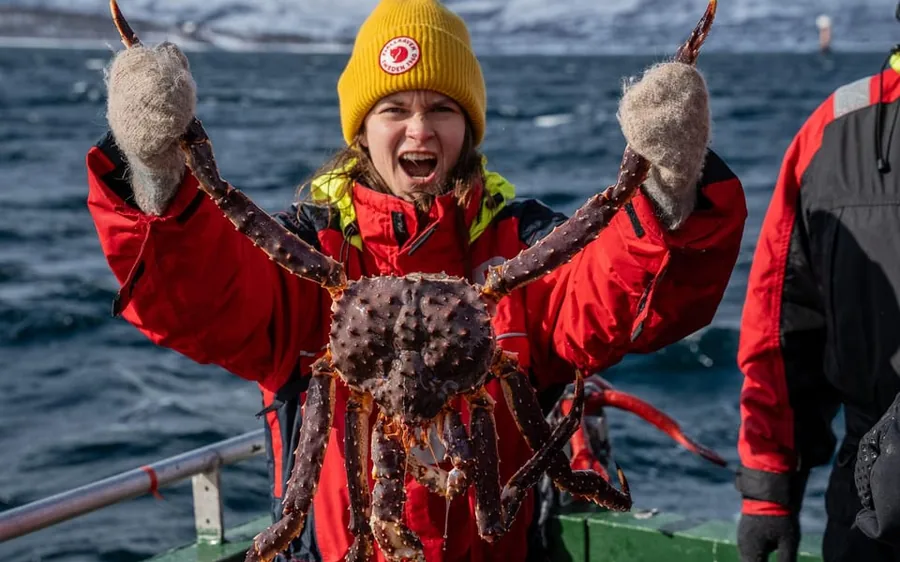
A guest in a yellow hat holding a king crab above her head
Rated 4.7Small group
3 h

The official Tromsø king crab fish tour

4.7 · 40 reviews

  • Three hours, the fjords of Tromsø aboard the Senjafjell
  • Hands-on Arctic crab hunt
  • Likely to sell out
  • Free cancellation
$361$120.33 / hour
Check availability
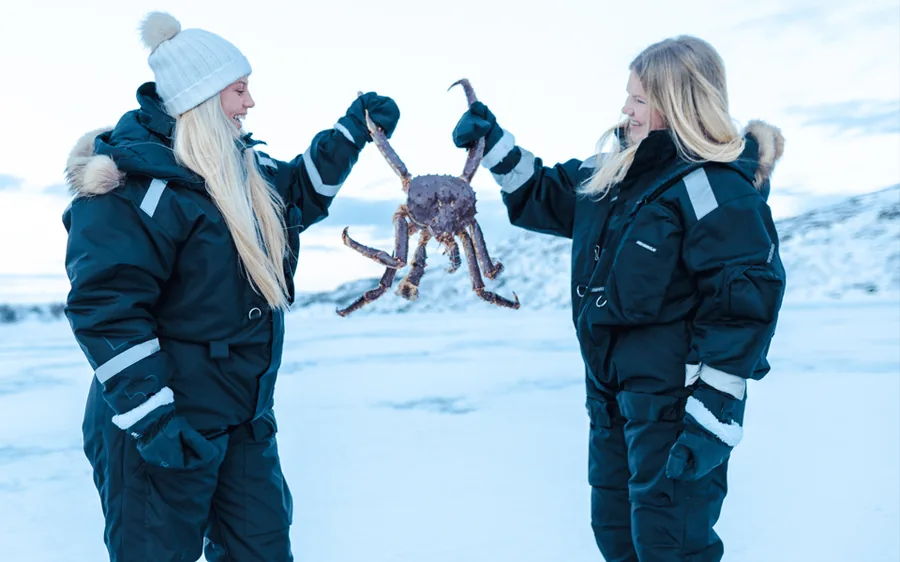
Two guests holding a king crab on the frozen fjord
WinterSnowmobile
3 h

Kirkenes: Winter King Crab Fishing & King Crab Meal

4.6 · 5 reviews

  • Three hours, a snowmobile sled across the frozen fjord
  • You pull up your own crab trap
  • King crab meal Northern Norwegian style
  • Free cancellation
$369$123.00 / hour
Check availability

The haul

The two minutes everybody books this for

The pot breaks the surface, and the deck fills with legs.

The boat slows, the crew find the buoy, and the line comes up. On smaller boats it comes up by hand and you are on the rope; on the larger vessels a hauler does the lifting and you take the pot over the rail. Either way the pot arrives streaming water, and for a second or two nobody can see what is in it.

Then the crab comes out: usually several, sometimes a dozen, legs everywhere. The crew sort them on deck. Norwegian king crab fishing works to quotas and size limits, so undersized crab and females go back over the side, and the rest stay. This is the part of the day people describe afterwards, and it is why the question of whether you catch the crab yourself matters so much when you are choosing between listings.

Then everyone holds one. A big male weighs several kilograms and the legs reach past your elbows, so the photograph takes two hands and a bit of nerve. The crew take the shots for you on most boats.

The three shapes a safari takes

Same crab, three different days

Every listing on this site is one of these, and the difference is mostly the boat.

  • A cruise with a restaurant lunch

    Our top pick at $265. A comfortable explorer vessel, four and a half hours, the pots hauled with the crew, and then the crab cooked ashore and served with a red fish soup.

  • A small-group hunt with the meal on board

    $310 and $361. Three hours, a handful of guests, and the full sequence: bait, traps, haul, and the seafood eaten at sea while the boat drifts.

  • A trip across the ice or the open fjord in Kirkenes

    $279 by RIB in summer and $369 by snowmobile sled in winter, where the trap comes up through a hole cut in the ice and the crab is cooked beside it.

The meal

One crab between two, and what comes with it

The legs of one large crab fill a platter for two.

The standard portion on a Norwegian king crab safari is one crab shared between two people, and that is more food than it sounds: the legs of a single large male fill a platter. The crew boil it in salted water, crack the shells and serve the meat warm, usually with bread, butter or mayonnaise and a lemon.

Our top pick serves it in a restaurant ashore with a red fish soup alongside, which makes it a genuine lunch rather than a tasting. $310 serves seafood on board at sea. Both Kirkenes trips cook the crab where they catch it, and the winter one serves it in the Northern Norwegian style with the boat, or the sled, parked on the ice next to you.

If shellfish is difficult for someone in your party, write to the operator through the booking when you reserve. The boats carry soup and bread as well, and most have arranged something for guests who ask a few days ahead.

Five things people wish they had known

Small, and they change the day

All of these come from what guests write afterwards.

  • You are warmer than you expect

    The flotation suit is built for an Arctic deck in winter. People regularly overdress underneath it and spend the crossing unzipping.

  • The crab holds on

    Take it across the back of the shell as the crew show you. Holding a leg is how the crab ends up with a better grip on you than you have on it.

  • Seasickness is rare on these trips, and worth planning for anyway

    The Tromsø grounds are inside sheltered fjord water and the crossing is twenty minutes. If you are sensitive, take a tablet an hour before boarding and stay on deck looking at the horizon.

  • The light is the other half of the trip

    From late November to mid-January Tromsø is in polar night and the fjord is blue at noon. From late May to late July the sun stays up. Both are worth photographing as much as the crab.

  • The meal takes longer than the haul

    Plan the rest of the day loosely. The four-and-a-half-hour trip at $265 is mostly boat, table and conversation rather than rope.

Common questions

Questions about how a king crab safari works

Do you catch the crab yourself?

On our top pick, on $310, on $361 and on the Kirkenes winter trip, you help haul the pot over the rail and hold the crab. The small-group boats also let you prepare the bait and set the traps.

How long does a king crab safari take?

Two to four and a half hours on the water from Tromsø. Our top pick is the longest at four and a half hours because it adds the restaurant lunch ashore.

How much crab do you actually eat?

The usual portion is one crab between two people, served as cracked legs with bread and butter or mayonnaise. It is a full meal.

What do I wear?

Your own wool or fleece layers, with the thermal flotation suit, boots and gloves that the boat provides over the top. Thin layers underneath work better than thick ones.

Does the safari run in winter?

Yes. The Tromsø boats sail all year; in Kirkenes the summer trip uses a RIB and the winter trip crosses the frozen fjord by snowmobile sled to a trap under the ice.

Will I see the northern lights from the boat?

Between September and March, on a clear evening, it is possible on the later departures. The crab is the booking; the aurora is the bonus nobody can promise.

Is it suitable if I have never been on a small boat?

Yes. The grounds are inside the fjords, the suits are buoyant, and the crew brief everyone before the boat leaves the quay.

How far ahead should I book a king crab safari Tromso boats run?

A few weeks ahead. The small-group boats carry a handful of guests, and $361 is marked as likely to sell out.

In short

What happens on a king crab safari, in one paragraph

Suit, crossing, haul, meal.

A king crab safari Tromso boats run works like this. You meet at a quay in the town centre, put on a thermal suit, cross twenty minutes of fjord, help haul a pot from two hundred metres down, hold a crab the size of a bicycle wheel, watch the crew sort the catch to quota, and then eat one crab between two with bread and butter. That is the whole of it, and it takes between two and four and a half hours.

The choice between listings is a choice about how much of that you do with your own hands and where you eat afterwards. Our top pick at $265 gives you the rope and a restaurant table. $310 gives you the bait, the traps and a meal at sea.

Go deeper

More on king crab safaris

Tromsø: King crab cruise & self-captured lunch in restaurant

4.4 · 87 reviews · Free cancellation 24 h

$265our top pick Check dates