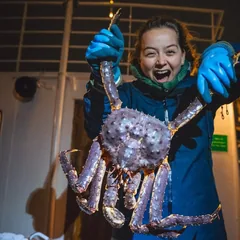
Tromsø: King crab cruise & self-captured lunch in restaurant
★ 4.4 · 87 reviews
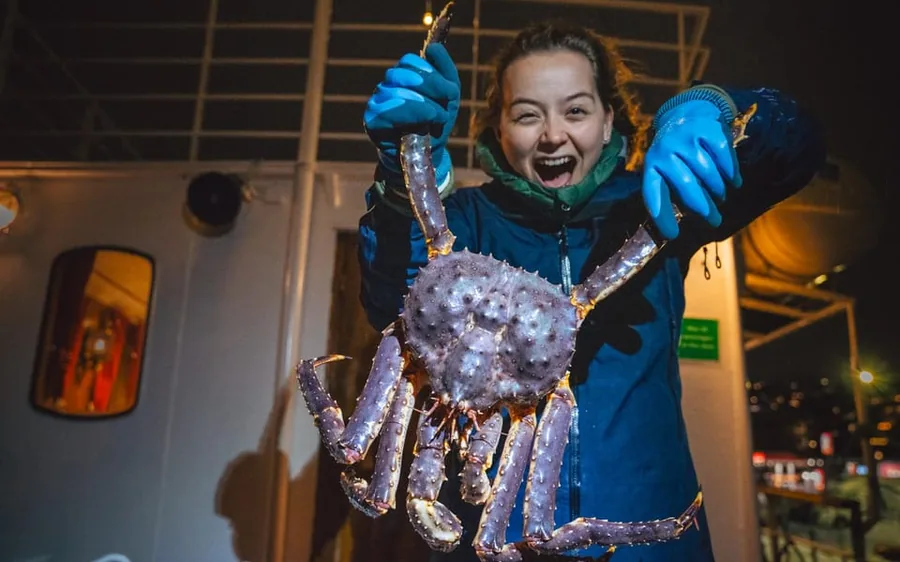
- Four and a half hours, hunting Arctic king crabs aboard an explorer vessel
- King crab lunch and fish soup
- You haul the pots yourself
- Free cancellation
What to wear
What to wear on a king crab safari is simpler than it looks, because the boat hands you the hard part. Every trip on this page provides an insulated flotation suit that goes over your own clothes, plus gloves for handling the crab. Your job is the layer underneath, a warm hat, and footwear you are happy to have wet. Bring those four things and an Arctic morning on the water stops being a problem to solve.

Quick answer
The boat gives you an insulated suit and gloves; you bring a thermal base layer, a warm mid layer, a hat that covers your ears, and shoes with grip. Wool works better than cotton next to the skin, because it stays warm when damp. A scarf or neck gaiter is the item people most often wish they had packed. On $265, our top pick, you are out for four and a half hours and eat ashore afterwards, so pack for the deck rather than for the restaurant.
The suit
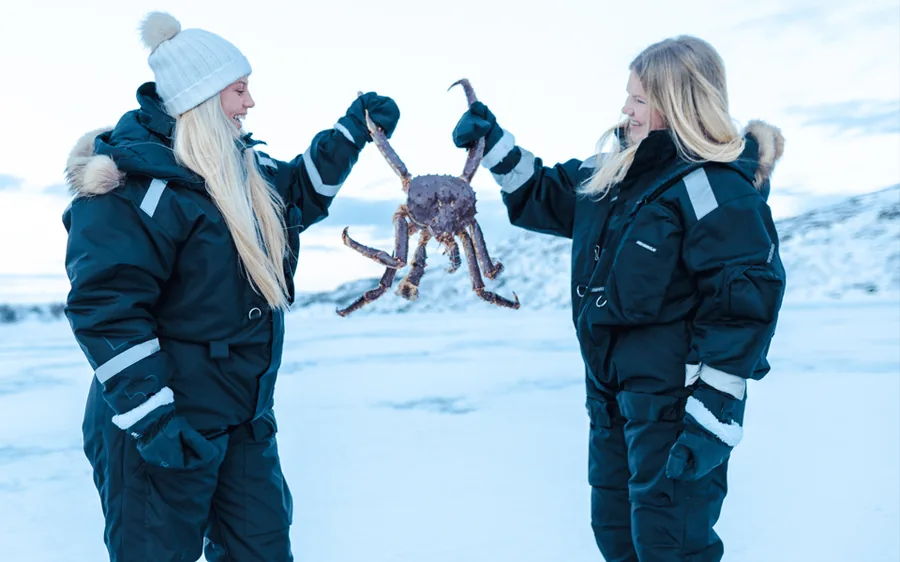
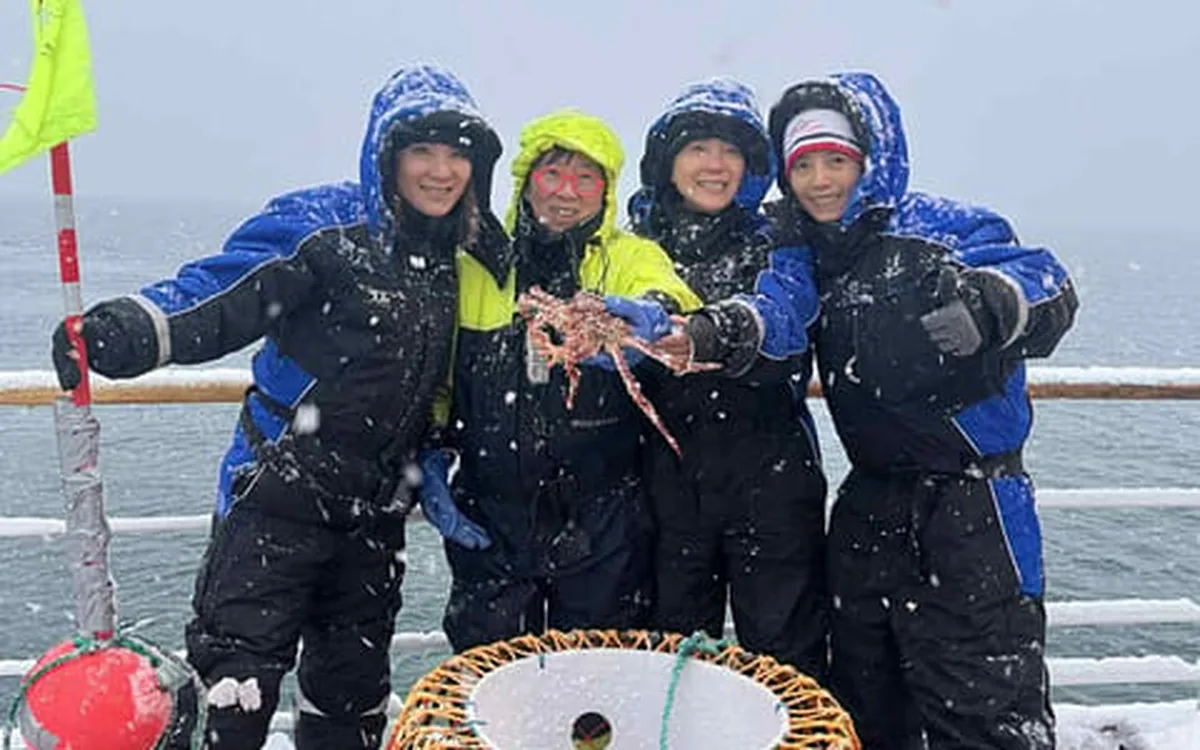
A one-piece insulated flotation suit, provided, worn over your own clothes.
The standard piece of kit on Arctic water in Norway is a one-piece insulated flotation suit. It is windproof, it floats, it closes at the wrists and ankles, and it goes on over whatever you are already wearing. You put it on at the quay or in the saloon before the boat leaves, and you take it off when you step back onto the pontoon.
Every trip on this site includes one. $96 describes them in its listing; $265 and $361 fit them before departure; the Kirkenes trips at $279 and $369 use the same idea, with the winter one adding a helmet for the snowmobile sled.
The suits come in sizes and the crew will pick yours. They are roomy on purpose, so there is space for a jumper underneath. This is the reason the packing advice below is about layers rather than about a coat: your own outer jacket usually stays in the bag.
Two practical notes. Wear something you can move your arms in, because hauling a rope with the crew is part of the day on several of these trips. And put your phone somewhere you can reach with the suit zipped, since the pot coming over the rail is the photograph.
Under the suit
Warm, dry and able to move. In that order.
Long sleeves and long legs, next to the skin. Merino is the standard here for a reason: it holds warmth when it is damp, and Arctic air plus sea spray means damp.
One jumper is usually enough under the flotation suit. Two if you feel the cold, which is what the roomy cut is for.
Bring a spare pair in your bag. Warm feet are the difference between three hours on deck and three hours thinking about your feet.
Jeans work in summer; soft trousers or thermal leggings work better in winter, because they keep their warmth if a wave lands on the rail.
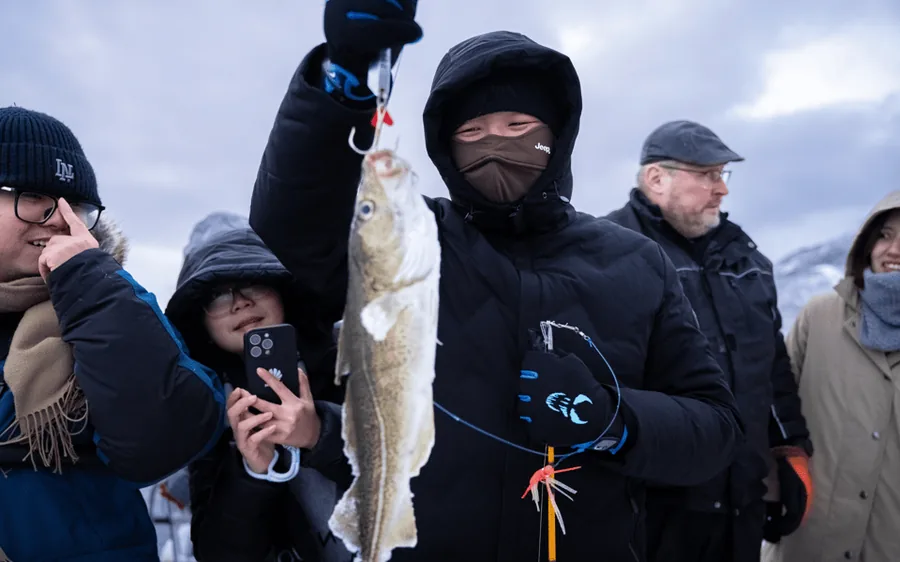
Wind on an open deck finds ears first. A wool beanie is enough, and it fits under a snowmobile helmet on the Kirkenes winter trip.
The item reviews mention most often as the thing people wished they had. It closes the gap between the suit collar and your face.
Hands, face and feet
Two pairs of gloves, something over the face, and boots you can walk on ice in.
Hands. The crew provide heavy gloves for handling the crab, because the shell is spined and wet. Bring a thin pair of your own as well, the kind that work on a phone screen. The sequence everybody ends up doing is: heavy gloves for the pot, thin gloves for the photographs, hands in pockets in between.
Face. In winter, a gaiter you can pull up over your nose is worth more than any other single item. Lip balm helps. On bright spring days, sunglasses matter more than people expect, because low sun off water and snow is dazzling for hours at a time.
Feet. Decks are wet, and so is the ice on the Kirkenes winter trip. Waterproof boots with a grip sole are the right answer; trainers with grip are an acceptable one in summer. Whatever you pick, wear it with wool socks and bring a dry pair for afterwards.
If you are going out on $896, the eleven-hour day from Saariseläkä to Kirkenes, treat it as a full Arctic day rather than a boat trip: proper boots, spare socks, hand warmers and something to eat on the road.
Book direct
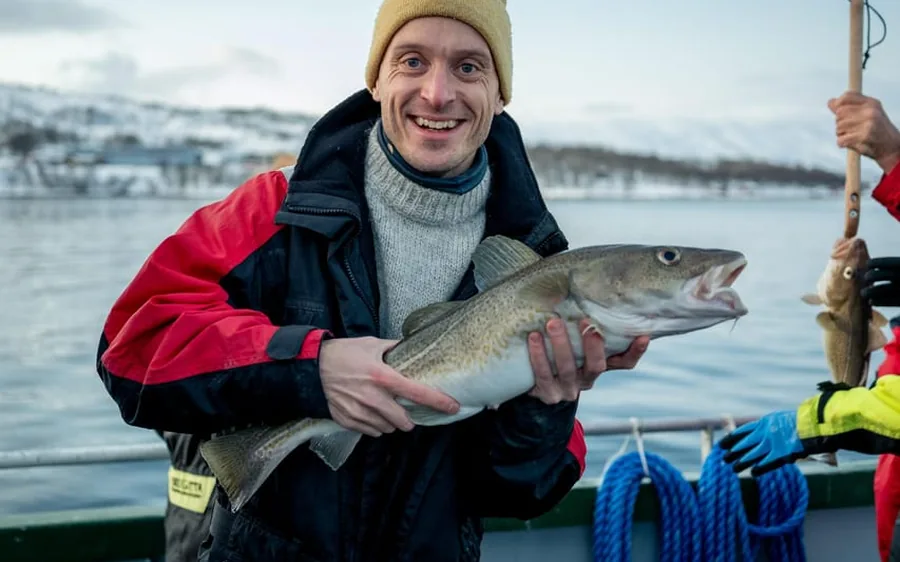
Our top pick, the most reviewed fishing trip, the winter ice safari and the cheapest two hours on the water.
★ 4.4 · 87 reviews
★ 4.8 · 743 reviews
★ 4.6 · 5 reviews
★ 4.7 · 431 reviews
Four things people wish they had brought
Gathered from what reviewers of a king crab safari Tromso mention afterwards.
Cheap, weighs nothing, closes the one gap the suit leaves. If you bring a single extra thing, bring this.
The heavy gloves are for the crab. Photographs happen with bare or thin-gloved hands, and in winter that is a short window.
For the walk back into town afterwards. Takes no space and improves the rest of the day.
Somewhere for a phone and a wallet that stays closed when the deck is wet. Several boats have lockers, and your own pocket is still easier.
Cameras in the cold
Keep the phone warm, be ready when the rope moves, and plan around the light.
Cold shortens battery life, so keep your phone in an inside pocket where your own warmth reaches it and take it out for the moment rather than holding it the whole way. A power bank in the same pocket covers a long trip.
The three photographs everybody takes are the same three: the pot breaking the surface, a crab held up at full span, and the plate of legs at the end. The first is a quick moment, so have the phone ready when the rope starts coming in. The second is easier than it looks because the crew are used to holding the crab still while you shoot. The third happens indoors or under lights, so it is the one that always comes out well.
In winter the light is the thing to plan around. Around midday in December and January the sky over Tromsø turns blue and pink for a couple of hours without the sun rising, and that is the best light of the day. In summer the trip can run under a sun that stays up all night, and an evening departure gives you low gold light on the water.
Seasickness, handled
Sheltered fjords, a tablet an hour ahead, and the horizon in view.
Most of these trips stay inside the fjord system around Tromsø, which is sheltered water with islands on both sides rather than open ocean. That is the main reason people are comfortable on them: $265 works pots in the fjord, and $96 runs two hours to fishing grounds the local boats use every week.
If you know you are sensitive to motion, three things work. Take a tablet an hour before you board, since it needs time. Eat something light beforehand rather than travelling on an empty stomach. And stay on deck looking at the horizon or at the islands, where the view is anyway.
The boats themselves help. Several have a heated saloon you can sit in, and the crew are used to guests who prefer the middle of the boat. If the weather looks unsuitable, operators here move or refund trips rather than sail into it — which is also why the cancellation terms on every listing are worth reading when you book.
Summer and winter kit
One list all year, with a jumper added or taken away.
Winter, roughly November to March. Thermal base layer, wool jumper, wool socks, a hat that covers the ears, a gaiter, waterproof boots, thin gloves under the crew gloves, and hand warmers if you feel the cold. This is also northern lights season, so a trip that runs late gives you a chance of the sky doing something while you are out there.
Spring, April and May. Bright, still cold on the water, and sunglasses become a real item. Same layers, one fewer.
Summer, June to August. The midnight sun runs from late May to late July, so a trip can start in the evening and still be in full daylight. A base layer and a fleece under the suit is usually plenty; bring the hat anyway, because wind over water is cold in any month.
In every month the answer to what to wear on a king crab safari comes down to the same short list, because the boat carries the heaviest item for you.
Autumn, September and October. The aurora returns, the air sharpens, and the winter list applies again. Whatever the month, the boat supplies the suit, so the difference between seasons is one jumper and a pair of gloves.
Common questions
The boat provides an insulated flotation suit that goes over your clothes, so your own outer jacket usually stays in the bag. Bring the layers that go underneath.
A wool or synthetic base layer, a fleece or wool jumper, warm socks and long trousers. Wool beats cotton because it stays warm when damp.
Waterproof boots with a grip sole. Decks are wet, and on the Kirkenes winter trip you are walking on ice.
Yes, heavy gloves for handling the crab. Bring a thin pair of your own for using a phone.
The suit does most of the work, and the crew fit it before you leave the quay. The parts people notice are ears, neck and feet, which is what the hat, gaiter and wool socks are for.
The same list with one layer fewer. The suit is provided in every month, and the wind over water stays cool even under the midnight sun.
In short
Six items in the bag, the suit from the boat.
Base layer, jumper, wool socks. The warmth under the suit.
Hat and gaiter. Ears and neck, the two places the wind finds.
Shoes with grip, ideally waterproof. Wet decks in every season, ice in winter.
Thin gloves. For the phone, under the crew gloves.
The boat supplies the rest. Our top pick, $265, runs four and a half hours with lunch ashore, and a king crab safari Tromso is worth booking a few weeks ahead because the small-group boats fill first.
Go deeper
Eight trips compared by price, by hours and by how much crab ends up on the plate.
VerdictEight ranked for one decision, with a straight answer for each kind of visitor.
How it worksThe boat, the pots, the haul and the meal, hour by hour.
Tromsø or KirkenesTwo towns, two kinds of safari, and which one suits the trip you are already taking.
The mealHow much crab you get, how it is served, and what the boats cook alongside it.
When to goMonth by month: polar night, northern lights, midnight sun and the ice.